Little Man
2006
This was the official website for the 2006 comedy, Little Man.
Content is from the site's archived pages and other outside reviews.

After leaving the prison, the dwarf criminal Calvin Sims joins to his moron brother Percy to steal an expensive huge diamond in a jewelry for the mobster Walken. They are chased by the police, and Calvin hides the stone in the purse of the executive Vanessa Edwards, whose husband Darryl Edwards wants to have a baby. Percy convinces Calvin to dress like a baby and be left in front of the Edwards's house to get inside the house and retrieve the diamond. Darryl and Vanessa keep Calvin for the weekend and decide to adopt him, while Walken threatens Darryl to get the stone back.
Featured Crew
Keenen Ivory Wayans
Director, Screenplay
Shawn Wayans
Screenplay
Marlon Wayans
Screenplay
TOMATOMETER : CRITICS 12% | AUDIENCE 54%
Critics Consensus: Another gimmicky comedy from the Wayans brothers, Little Man comes with the requisite raunchiness, but forgot to bring the laughs.
CRITICS REVIEWS
JM Tyree
Time Out Top Critic
August 31, 2006
Keenen Ivory Wayans is best known for ‘Scary Movie’ and the American comedy sketch show ‘In Living Color’, which launched the careers of Jim Carrey and Jamie Foxx. Brothers Marlon and Shawn complete the Wayans comedic dynasty – the publicity for ‘Little Man’ calls them ‘the most successful African-American filmmakers in cinema history’ (Spike Lee and John Singleton, take note).
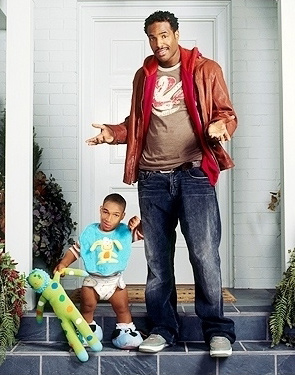
‘Little Man’, like Wayans’ previous film, ‘White Chicks’, fails as check-your-brain-at-the-door entertainment, and for the same reason: it’s a concept, not a movie. The concept is that Marlon Wayans’ face looks really funny shrunk down and digitally attached to the body of child actor Linden Porco. Together, they’re Calvin Simms, a midget gangster on the lam who, disguised as a baby, hides himself and his loot in the household of newly-engaged Darryl (Shawn Wayans) and Vanessa (Kerry Washington).
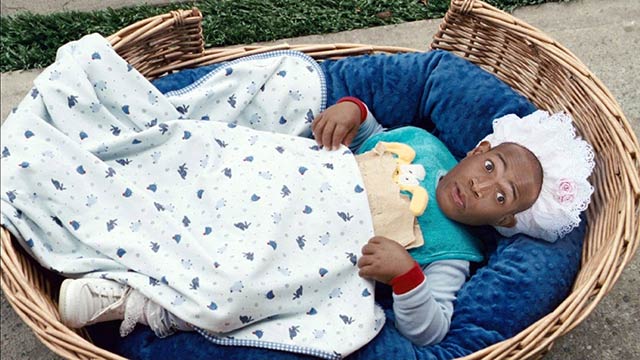
They take him in. Eventually little ‘pumpkin butt’ gets unmasked, but not before endearing himself to the couple by making out with their busty white friend, sexually harassing a busty beer-girl at a hockey game, and watching the couple have sex.
It’s adult slapstick comedy for children, apparently. Keenen Ivory Wayans loved the nine-year-old Porco because ‘Linden got every joke.’ I couldn’t shake the image of Porco wandering around without a head. Marlon Wayans achieves an occasional laugh using only his face, helped by a series of really cute baby hats. He did his scenes within the solitary confinement of a green screen stage – sad, no?
+++
Cole Smithey ColeSmithey.com
July 14, 2006 | Rating: 1/5
In spite of the admirable effort that the Wayans brothers went to in digitally transplanting Marlon Wayans head and facial expressions onto the two-foot-six-inch body of a nine-year-old actor (Linden Porco) "Little Man" is a bawdy and violent comedy that rankles more than tickles. Career criminal dwarf Calvin (Marlon Wayans) has just been released from prison when he steals a gigantic diamond that he's soon forced to hide with newlyweds Daryl and Vanessa (Kerry Washington and Shawn Wayans). Calvin and his half-witted accomplice (Tracy Morgan) dress Calvin up like a baby and leave him on the couple's doorstep to gain access to the diamond in time to turn it over to an impatient mob boss (Chazz Palminteri). The curious couple gradually decides to keep Calvin as their own even as the diminutive outlaw's true colors start to show. The film's overreaching attempts at inventive humor slip into sheer gibberish.
Rated PG-13. 97 mins. (C-) (Two Stars)

+++
Philip French Observer (UK)
January 20, 2007
(90 mins, 12A)
Directed by Keenen Ivory Wayans; starring Shawn Wayans, Marlon Wayans, Kerry Washington, Chazz Palminteri
The work of the Wayans brothers, Little Man is even less funny than their last comedy, White Chicks, and enough to get them permanently evicted from the house of mirth. Directed by Keenen Ivory Wayans, it stars Marlon Wayans as Calvin Sims, a three-foot dwarf on the run following a botched jewelery heist during which he's hidden a giant diamond in the handbag of a black businesswoman and her husband (Shawn Wayans).
To regain the jewel, he pretends to be a baby left on their doorstep and, eager to have a child, they more or less adopt him. Much urination, farting, defecation, breast fondling, penis displaying, lechery, homophobic joking and painful mayhem ensues, in which every missile flies with the accuracy of an Exocet to the nearest groin. Raucously rabble-rousing, yes; uproariously Rabelaisian, no.
As a longtime fan of the Wayans brothers, I went into Little Man really wanting to like it. Their style—over-the-top, unapologetically silly, sometimes totally ridiculous—is usually exactly my kind of humor. And to be fair, there are moments in this one that reminded me why I’ve laughed so hard at their other movies over the years. But overall… this one just landed somewhere in the middle for me.
I actually took my younger sister to see it to celebrate something much bigger than the movie itself—she had just completed treatment for binge eating disorder. So the night already felt meaningful, and honestly, that probably shaped how I experienced the film. We were both just happy to be out, laughing a little, and enjoying a normal moment together again.
The premise of Little Man—a criminal posing as a baby to retrieve a stolen diamond—is exactly the kind of wild, anything-goes concept the Wayans are known for. And yeah, seeing Marlon Wayans digitally shrunk down and acting like a baby is good for a few laughs at first. But after a while, the joke kind of wears thin. It starts to feel less like a full movie and more like one extended gag that keeps repeating itself.
That said, I did appreciate the familiar chemistry between Marlon and Shawn Wayans. Their back-and-forth still has that chaotic, brotherly energy that’s carried a lot of their past films. And if you’re already a fan of their brand of humor—lots of slapstick, crude jokes, and pushing boundaries—you’ll probably find at least a handful of scenes that hit.
But I can’t ignore that a lot of the comedy leans heavily into the same type of jokes over and over again. It’s not that I’m above that kind of humor—it’s just that here, it didn’t always feel fresh or clever. Even some critics have said it feels more like a gimmick than a fully developed story, and I can see why.
Still, the movie ended up being kind of secondary to what the night meant. After the show, we went out to eat, and that was the real moment I’ll remember. My sister handled it with so much confidence—no stress, no old patterns creeping in. Just enjoying the meal, being present, and feeling good. I was honestly so proud of her.
So yeah, as a movie? Little Man is just okay. Not the Wayans at their best, but not completely without laughs either. As an experience tied to that night? It’ll always mean more to me than the film itself. Sally Tomlinson
+++
AUDIENCE REVIEWS
*½ JJ H
June 30, 2008
Completely awful. Way too many "blank to the crotch" and not enough clever jokes. I enjoy potty humor, but these were not good dick and fart jokes. Instead they focused on the slapstick and the punch to the groin jokes.
Occasionally, there was something that was funny, but that funny joke would go on way too far to the point, where it was no longer funny, but annoying.
Not recommended. Unless you think Marlon Wayons head on a midgets body is funny, as well as Marlon Wayons punching Shawn Wayons in the crotch many times.
You've been warned!
*Private U J
une 30, 2008
can't believe i watched the whole thing

*****PENNY
June 30, 2008
GREAT MOVIE, FUNNY MOVIE, THIS MOVIE IS THE ONLY MOVIE THAT KEEP MY 2YR. OLD QUIET AND SITTING IN ONE PLACE.
AGAIN GREAT MOVIE!
*****pretty p
June 30, 2008
awsome this is sooo hularius this was like ssoo funy
Karl H
June 30, 2008
Why don't the Wayans stop making movies?
*****Amanda * June 29, 2008
i love how percy always gets b**** slapped!!!! funny
*** ½ Jasmine C
June 29, 2008
Very funny, I was rolling most of the time.
* Private U
June 28, 2008
Great movie Laugh all the way through
Angela16099435 Angela June 28, 2008
Impatiently waiting for the retirement (or death) of the Wayans brothers.
*****pete 1
June 28, 2008
very funny,same sort of /level of humour as white chicks or scary movie
who cares if it is a rip off a bugs bunny cartoon
Patrick S
June 28, 2008
would not watch this movie if i was set up like "a clockwork orange"
½ Paul C
June 27, 2008
Dire - a completely laugh-free comedy, which in itself is impressive. Half a star for the totally gorgeous Brittany Daniel.
***** Troublemaker
June 27, 2008
awsome very funny i loved it

***Cindy T
June 27, 2008
this was alright, pretty funny. though it makes you think and wonder whether that's possible. sure it's funny, but still.. it had no sense of realism. but focusing on the funny side, it was good.
***½ Ray M
June 27, 2008
The Wayans brothers strike again, funny as heck a must see movie
Katie W
June 26, 2008
Is there an "EXTREMELY NOT INTERESTED" button?
***½I Tell The Girls Like Doritos That?s Nacho Cheese
June 26, 2008
funny movie but not a movie you'll buy on dvd you'll wait till it comes on t.v
***** kenzie
June 26, 2008
this movie is so cool
**½ Sean T
June 25, 2008
Wholly unremarkable

More Background On LittleMan-Movie.com
During the early and mid-2000s, nearly every major Hollywood release was accompanied by a dedicated promotional website. Before social media became the dominant marketing channel, these standalone sites served as digital hubs where audiences could watch trailers, download wallpapers, learn about the cast, browse production notes, and immerse themselves in the film's world before purchasing a ticket.
LittleMan-Movie.com was one of those official promotional websites. Created to support the theatrical release of the 2006 comedy Little Man, the site functioned as Columbia Pictures' online destination for audiences interested in the film. Although the theatrical marketing campaign concluded years ago, archived versions of the website continue to preserve an interesting snapshot of movie marketing during an era when Flash-based promotional sites were standard throughout Hollywood.
Today, the website remains valuable primarily as a historical artifact documenting one of the more unusual comedies produced by the Wayans family and illustrating how film studios promoted theatrical releases before the rise of YouTube, Instagram, Facebook, TikTok, and streaming-first advertising.
The Film Behind the Website
Little Man was released in the United States on July 14, 2006. The comedy was directed by Keenen Ivory Wayans, who also co-wrote and produced the film alongside brothers Shawn and Marlon Wayans. Together, the three brothers had already established themselves as one of Hollywood's most recognizable comedy teams through projects such as In Living Color, Scary Movie, and White Chicks.
The film stars:
- Marlon Wayans as Calvin "Babyface" Sims
- Shawn Wayans as Darryl Edwards
- Kerry Washington as Vanessa Edwards
- Tracy Morgan as Percy
- Chazz Palminteri as Walken
- Molly Shannon
- John Witherspoon
- Lochlyn Munro
Produced by Wayans Bros. Entertainment in partnership with Revolution Studios and distributed by Columbia Pictures through Sony Pictures Releasing, Little Man combined crime, slapstick, and family comedy into an intentionally outrageous premise designed to appeal primarily to younger comedy audiences.
An Absurd Premise That Defined the Marketing
The movie centers on Calvin Sims, a recently released jewel thief who steals a priceless diamond for a crime boss. When the robbery goes wrong, Calvin hides the diamond inside the purse of Vanessa Edwards before police can capture him.
Discovering where the purse has gone, Calvin devises an outrageous plan. Because of his extremely small stature, he disguises himself as an abandoned baby and is left on the doorstep of Vanessa and her husband Darryl. Hoping to retrieve the hidden diamond, Calvin instead becomes part of the household, leading to increasingly ridiculous situations as he attempts to maintain the disguise while avoiding discovery.
The concept intentionally stretched credibility in favor of visual comedy. Rather than grounding the story in realism, the filmmakers embraced exaggerated slapstick, physical humor, crude jokes, and increasingly implausible scenarios that became trademarks of many Wayans productions.
Ownership and Purpose of LittleMan-Movie.com
LittleMan-Movie.com was not an independent fan site. It served as the film's official promotional website, created on behalf of Columbia Pictures and the movie's distributors to support its theatrical release.
Like many studio websites of the period, it functioned as an online marketing extension of the theatrical campaign. Visitors could typically expect features such as:
- Story synopsis
- Cast biographies
- Character information
- Movie trailers
- Television spots
- Production notes
- Image galleries
- Desktop wallpapers
- Downloads
- Release information
The objective was straightforward: generate excitement, encourage trailer sharing, build awareness before release, and ultimately drive ticket sales.
Unlike today's marketing campaigns, which are spread across dozens of social media platforms, dedicated movie domains like LittleMan-Movie.com concentrated virtually all promotional materials into one centralized destination.
A Product of the Flash Website Era
Looking back, LittleMan-Movie.com represents a distinct period in web design.
Most Hollywood promotional sites built between approximately 2001 and 2009 relied heavily on Adobe Flash. Rather than traditional web pages, visitors often encountered animated introductions, interactive navigation, embedded music, mini-games, downloadable media, and animated transitions.
These websites emphasized entertainment as much as information.
Although visually impressive for their time, Flash-based sites eventually became obsolete as browsers discontinued Flash support. As a result, many official movie websites disappeared entirely or became partially inaccessible.
Archive.org has therefore become one of the few remaining places where portions of these promotional websites can still be viewed, making sites like LittleMan-Movie.com valuable examples of early entertainment web design.
The Wayans Brothers' Influence
Much of the attention surrounding Little Man stemmed from the reputation of the Wayans family.
Beginning with the groundbreaking sketch comedy series In Living Color, Keenen Ivory Wayans helped launch the careers of numerous comedians while establishing the family's signature style of comedy.
By 2006, audiences already associated the Wayans brothers with:
- broad physical comedy
- parody
- outrageous situations
- boundary-pushing humor
- memorable character performances
Following the commercial success of White Chicks, expectations for Little Man were high. Promotional materials emphasized the family connection, positioning the movie as the latest collaboration from the creative team responsible for several popular comedies of the previous decade.
An Innovative Visual Effects Challenge
One of the movie's most remarkable technical achievements involved creating the illusion that Marlon Wayans was only a few feet tall.
Rather than using forced perspective or simple camera tricks, the production filmed many scenes twice.
Nine-year-old actor Linden Porco performed Calvin's body movements while interacting with the rest of the cast. Marlon Wayans separately performed the identical scenes against a greenscreen. During post-production, visual effects artists digitally replaced Porco's head with Marlon's face, carefully matching expressions, timing, and movements.
The result created one of the more unusual digital character effects attempted in a mainstream comedy during the mid-2000s. Although audiences sometimes noticed imperfections, the technology attracted considerable attention during the film's marketing campaign and became one of the production's defining characteristics.
Box Office Performance
Critical reviews proved overwhelmingly negative, but audiences still purchased tickets in substantial numbers.
Produced on a reported budget of approximately $64 million, Little Man earned roughly $58.6 million domestically and more than $100 million worldwide, making it a commercial success despite poor critical reception. It also opened strongly in several international markets, including the United Kingdom, where it debuted near the top of the box office rankings.
This contrast between critics and moviegoers became one of the film's defining stories. While reviewers largely dismissed the movie, enough fans of the Wayans brothers' brand of comedy attended theaters to make the project financially viable.
Critical Reception: Critics and Audiences Viewed the Film Very Differently
Perhaps the most interesting aspect of Little Man was the enormous gap between critical opinion and audience reaction.
Professional critics were overwhelmingly negative. On Rotten Tomatoes the film holds a critics' score of approximately 12%, while Metacritic assigned it a score of 26 out of 100, indicating generally unfavorable reviews. Critics frequently argued that the movie relied too heavily on a single visual gag—the digitally shrunken Marlon Wayans—rather than building a strong comedic story around the concept.
Time Out critic JM Tyree famously described the film as "a concept, not a movie," arguing that the special effects gimmick quickly overshadowed character development. Other reviewers criticized the abundance of slapstick violence, bathroom humor, sexual jokes, and repetitive physical comedy.
Despite those reviews, general audiences proved considerably more receptive. CinemaScore surveys conducted during the theatrical release awarded the movie a respectable B+ grade, suggesting that ticket buyers enjoyed it significantly more than professional reviewers did. Online audience ratings similarly settled around the middle of the scale, reflecting a movie that many viewers found entertaining even while acknowledging its flaws.
This divide between critics and audiences has become one of the defining aspects of Little Man. It illustrates how broad commercial comedies often appeal to moviegoers seeking uncomplicated entertainment even when critics dismiss them.
Awards and Recognition
Although Little Man earned more than $100 million worldwide, awards recognition came primarily from organizations highlighting poorly reviewed films.
The movie received multiple nominations at the 2007 Golden Raspberry Awards (Razzies), including Worst Picture, Worst Director, Worst Screenplay, Worst Screen Couple, and Worst Actor. It ultimately won three Razzie Awards, including Worst Actor (shared by Marlon and Shawn Wayans), Worst Screen Couple, and Worst Remake or Rip-off, the latter referencing similarities to the 1954 Bugs Bunny cartoon Baby Buggy Bunny.
The film also received several nominations from the Stinkers Bad Movie Awards, further cementing its reputation as one of the year's most critically criticized studio comedies. Yet these honors did little to diminish its financial success or popularity among many fans of the Wayans brothers.
The Legacy of the Wayans Comedy Style
Whether viewers loved or disliked Little Man, few questioned the influence of the Wayans family on American comedy.
Beginning with In Living Color, the family helped launch the careers of numerous comedians while redefining sketch comedy during the 1990s. They later found enormous success with films such as Don't Be a Menace to South Central While Drinking Your Juice in the Hood, Scary Movie, White Chicks, and numerous other productions.
Their comedy has consistently emphasized:
- exaggerated physical humor
- outrageous premises
- satire of popular culture
- parody
- fearless willingness to offend
- broad mainstream appeal
Little Man fits squarely within that tradition. Rather than attempting sophisticated social commentary, it embraces absurdity from beginning to end. Even viewers who disliked the film generally recognized it as unmistakably a Wayans production.
Technical Achievement Beyond the Comedy
Although reviews often focused on the jokes, many industry observers praised the ambitious visual effects.
Creating Calvin Sims required an extensive combination of greenscreen photography, motion matching, digital compositing, and facial replacement techniques. Every major scene involving the character required duplicate performances before visual effects artists combined them during post-production.
For a comedy released in 2006, these techniques represented a surprisingly ambitious undertaking. While modern CGI has become commonplace, Little Man demonstrated how digital effects could be integrated into live-action comedy long before today's advanced facial replacement technologies became routine.
DVD special features later highlighted the complexity of the production, including documentaries devoted specifically to the visual effects process and behind-the-scenes filmmaking.
LittleMan-Movie.com as a Digital Time Capsule
Today, LittleMan-Movie.com serves a very different purpose than it did during the film's theatrical release.
Originally designed to sell movie tickets, the website has become an example of early twenty-first-century entertainment marketing. Visitors interested in web history often examine archived versions of the site to better understand how Hollywood studios promoted films before streaming media and social platforms fundamentally changed digital advertising.
Typical studio websites of that era featured:
- downloadable wallpapers
- printable posters
- Flash animations
- exclusive trailers
- interactive menus
- production photographs
- cast biographies
- desktop screensavers
- downloadable icons
- behind-the-scenes information
Many of these features disappeared from the internet after Adobe Flash reached end-of-life, making archived versions particularly valuable for researchers studying web design and online entertainment marketing during the early broadband era.
Audience Appeal
Although Little Man has never been regarded as a critical classic, it continues to find viewers.
Fans who enjoy the movie typically appreciate:
- outrageous slapstick comedy
- the chemistry between Shawn and Marlon Wayans
- Tracy Morgan's eccentric supporting performance
- intentionally ridiculous situations
- physical comedy reminiscent of classic cartoons
Conversely, viewers seeking sophisticated humor or realistic storytelling often find the movie difficult to enjoy. That polarization has helped keep discussions surrounding the film alive nearly two decades after its release.
Streaming services and home media have also introduced Little Man to younger audiences who missed its theatrical run. Like many broad comedies of its era, it has developed a modest second life through television broadcasts and streaming platforms.
Cultural Significance
From a cultural standpoint, Little Man represents an interesting moment in Hollywood comedy.
The mid-2000s saw studios investing heavily in high-concept comedies built around a single memorable premise. Rather than relying on subtle storytelling, these films often asked audiences to accept an outrageous idea and simply enjoy the ride.
The movie also sparked discussion regarding the portrayal of little people in entertainment. Some critics questioned whether digitally shrinking Marlon Wayans for comedic purposes crossed ethical lines, while others viewed it simply as another example of exaggerated fantasy similar to countless cartoon-inspired comedies.
Regardless of where viewers stood, the film undeniably generated conversation beyond its box-office performance.
Why the Website Still Matters
LittleMan-Movie.com remains noteworthy not because it is still an active promotional platform, but because it documents an important period in internet history.
Before Facebook pages, YouTube premieres, Instagram campaigns, and TikTok marketing became standard, dedicated movie websites were often the centerpiece of a film's online presence. They represented significant investments by studios and frequently showcased cutting-edge web design techniques of their time.
For historians of digital media, archived movie websites help preserve:
- changing web technologies
- online marketing strategies
- promotional artwork
- multimedia design trends
- entertainment branding
- internet culture before social media dominance
LittleMan-Movie.com therefore serves as more than a companion to a comedy film. It offers a glimpse into how Hollywood once interacted with moviegoers online during the final years of the Flash era.
~~~
LittleMan-Movie.com occupies a unique place among archived entertainment websites. Originally created as the official promotional home for the 2006 comedy Little Man, it now functions as a preserved record of both a commercially successful Wayans brothers production and a rapidly disappearing style of movie marketing.
The film itself remains one of the most polarizing entries in the Wayans catalog. Critics largely rejected its reliance on crude humor and an outlandish central gimmick, while audiences proved considerably more forgiving, helping the movie surpass $100 million in worldwide box office receipts despite overwhelmingly negative reviews. Its ambitious visual effects, memorable premise, and unmistakable Wayans style have ensured that it continues to be discussed years after its release.
Meanwhile, the website has taken on historical significance of its own. As an artifact from the era of Flash-powered studio websites, it illustrates how film marketing evolved before the dominance of social media, streaming platforms, and mobile-first advertising. For movie enthusiasts, web historians, and fans of the Wayans family, LittleMan-Movie.com remains an interesting reminder of a distinctive period in both Hollywood and internet history.